Fresnel Rhombs
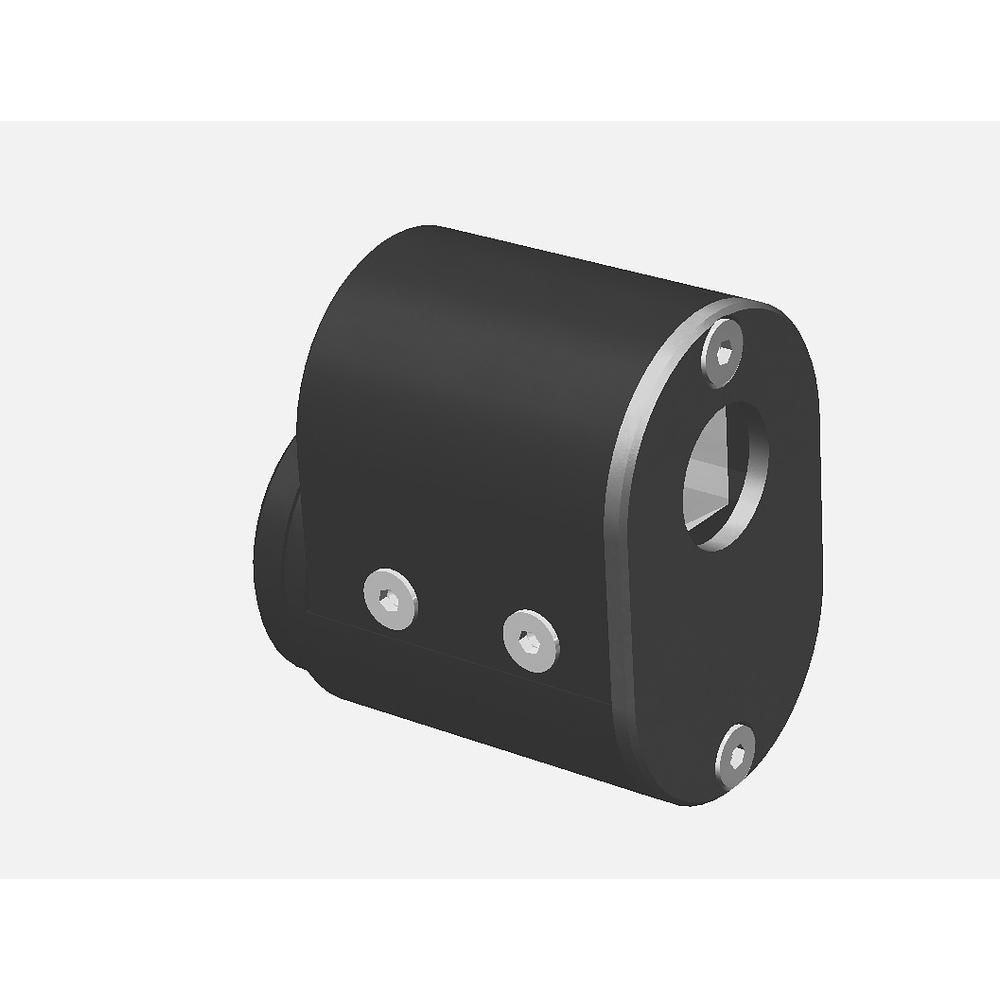
• Rotate polarization, operates over a wide wavelength range • λ/2 rhomb is two optically contacted λ/4 rhombs Due to unequal phase shifts arising in orthogonally polarized components of an incident wave at total… Read more →
Volume discount
- 5–9 units −5%
- 10+ units −10%
Applied in your cart. Quantities of any variant of this product count together.
Listed in
Configure & order — pick a catalog variant or configure your own
| SKU | Clear aperture · Material · Holder length L · Retardation · Holder diameter D · Wavelength range · Group · Note | |
|---|---|---|
| 481-1210 | 10 mm·UVFS·-·λ /2·-·210-400 nm·Unmounted Fresnel Rhoms·Fresnel rhombs with other dimensions and parameters or coatings are available upon request. Please send request for custom products. |
4 in stock
Ships in: 2–5 calendar days
$707
|
We can make this for you
No catalog variant matches your exact spec. Add it to your cart as a custom item — sales will confirm price and lead time within 1 business day.
Specifications
| Material | BK7, UVFS |
| Operating spectral range BK7: | 400-2000 nm |
| Operating spectral range UVFS: | 210-400 nm |
| Surface quality | 20-10 scratch & dig (MIL-PRF-13830B) |
| Surface flatness | λ / 10 @ 633 nm (all polished surfaces) |
| Retardation tolerance | ±2° |
| Broad band AR coating | R < 1% |
| Laser damage threshold | > 0.5 J / cm², 10 nsec pulse, 1064 typical |
Classification
| Type | rotator/fresnel |
Description
- Rotate polarization, operates over a wide wavelength range
- λ/2 rhomb is two optically contacted λ/4 rhombs
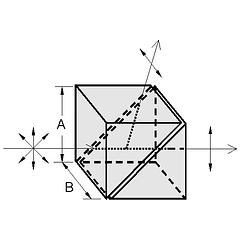
Due to unequal phase shifts arising in orthogonally polarized components of an incident wave at total internal reflection Fresnel Rhombs are used to alter polarisation type of radiation. They are designed so that two full internal reflections inside a rhomb provide π/2 phase difference between the orthogonally polarized components of radiation. Hence, if there is 45° angle between the polarization of the linearly polarized incident plane, the emerging beam is circularly polarized, i. e. the rhomb effect is similar to that of a quarter-waveplate. Therefore two identical Fresnel rhombs, installed in series, will provide π/2 phase difference similar to that of a half-waveplate, i. e. the device can rotate the beam polarization plane by 90°, leaving the beam direction invariable.