BBO Pockels Cells
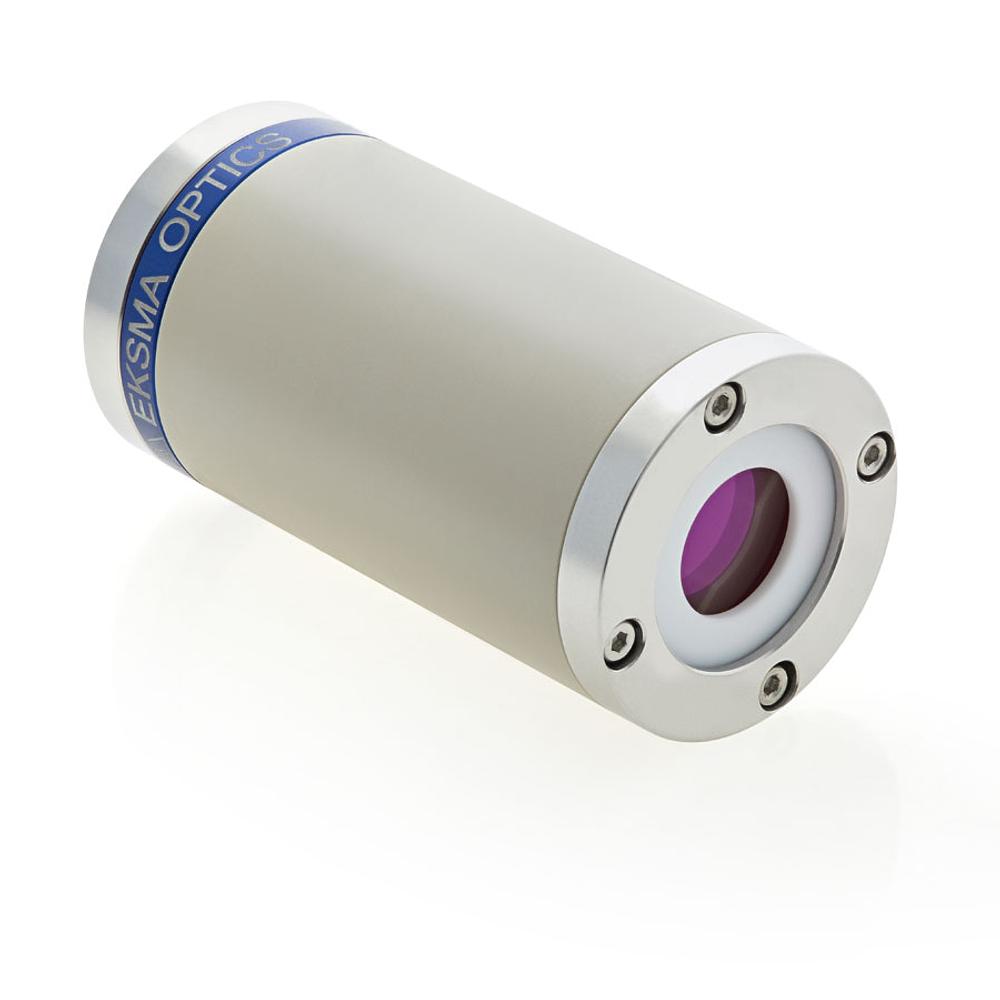
Features: • minimal piezoelectric ringing • low absorption • ceramic aperture is available • broad transmission range from 200 nm to 2000 nm • compact size Applications: • high repetition rate DPSS… Read more →
Listed in
Configure & order — pick a catalog variant or configure your own
| SKU | Quarter Wave Voltage* · Clear Aperture · Clear aperture · Central wavelength · Application · Group | |
|---|---|---|
| PCB10D-C-1030 | <6 kV DC·ø 9.6 mm·1030 nm·Nd host high power lasers |
Out of stock
$35,160
|
| PCB10D-C-1064 | <6 kV DC·ø 9.6 mm·1064 nm·Nd host high power lasers |
Out of stock
$35,160
|
| PCB12D-C-1030 | <7 kV DC·ø 11.6 mm·1030 nm·Nd host high power lasers |
Out of stock
$36,600
|
| PCB12D-C-1064 | <7 kV DC·ø 11.6 mm·1064 nm·Nd host high power lasers |
Out of stock
$36,600
|
| PCB3D-C-1030 | <1.7 kV DC·ø 2.5 mm·1030 nm·Yb host femtosecond lasers·BBO Pockels Cells for 1020-1040 nm range |
5 in stock
Ships in: 2–5 calendar days
$2,904
|
| PCB3D-C-1064 | <1.8 kV DC·ø 2.5 mm·1064 nm·Nd host high power lasers·BBO Pockels Cells for 1040 - 1070 nm range |
Out of stock
Ships in: 57–60 calendar days
$2,904
|
| PCB3D-C-800 | <1.3 kV DC·ø 2.5 mm·800 nm·Ti:Sapphire femtosecond lasers·BBO Pockels Cells for 770-820 nm range |
Out of stock
Ships in: 57–60 calendar days
$3,768
|
| PCB3D/25-C-1030 | <1.4 kV DC·ø 2.5 mm·1030 nm·Yb host femtosecond lasers·BBO Pockels Cells for 1020-1040 nm range |
2 in stock
Ships in: 2–5 calendar days
$3,960
|
| PCB3D/25-C-1064 | <1.5 kV DC·ø 2.5 mm·1064 nm·Nd host high power lasers·BBO Pockels Cells for 1040 - 1070 nm range |
Out of stock
Ships in: 57–60 calendar days
$3,960
|
| PCB3D/25-C-800 | <1.1 kV DC·ø 2.5 mm·800 nm·Ti:Sapphire femtosecond lasers·BBO Pockels Cells for 770-820 nm range |
Out of stock
Ships in: 57–60 calendar days
$6,660
|
| PCB3S-C-1030 | <3.4 kV DC·ø 2.5 mm·1030 nm·Yb host femtosecond lasers·BBO Pockels Cells for 1020-1040 nm range |
Out of stock
Ships in: 57–60 calendar days
$1,860
|
| PCB3S-C-1064 | <3.5 kV DC·ø 2.5 mm·1064 nm·Nd host high power lasers·BBO Pockels Cells for 1040 - 1070 nm range |
Out of stock
Ships in: 57–60 calendar days
$1,860
|
| PCB3S-C-800 | <2.6 kV DC·ø 2.5 mm·800 nm·Ti:Sapphire femtosecond lasers·BBO Pockels Cells for 770-820 nm range |
Out of stock
Ships in: 57–60 calendar days
$3,120
|
| PCB3S/25-C-1030 | <2.9 kV DC·ø 2.5 mm·1030 nm·Yb host femtosecond lasers·BBO Pockels Cells for 1020-1040 nm range |
Out of stock
Ships in: 57–60 calendar days
$2,394
|
| PCB3S/25-C-1064 | <3.0 kV DC·ø 2.5 mm·1064 nm·Nd host high power lasers·BBO Pockels Cells for 1040 - 1070 nm range |
Out of stock
Ships in: 57–60 calendar days
$2,394
|
| PCB3S/25-C-800 | <2.1 kV DC·ø 2.5 mm·800 nm·Ti:Sapphire femtosecond lasers |
Out of stock
$3,960
|
| PCB4D-C-1030 | <2.2 kV DC·ø 3.5 mm·1030 nm·Yb host femtosecond lasers·BBO Pockels Cells for 1020-1040 nm range |
13 in stock
Ships in: 2–5 calendar days
$3,912
|
| PCB4D-C-1064 | <2.3 kV DC·ø 3.5 mm·1064 nm·Nd host high power lasers·BBO Pockels Cells for 1040 - 1070 nm range |
Out of stock
Ships in: 57–60 calendar days
$3,912
|
| PCB4D-C-800 | <1.7 kV DC·ø 3.5 mm·800 nm·Ti:Sapphire femtosecond lasers·BBO Pockels Cells for 770-820 nm range |
Out of stock
Ships in: 57–60 calendar days
$5,268
|
| PCB4Q-C-1030 | <2 x 1.2 kV DC·ø 3.5 mm·1030 nm·Yb host femtosecond lasers·BBO Pockels Cells for 1020-1040 nm range |
Out of stock
Ships in: 57–60 calendar days
$7,020
|
| PCB4Q-C-1064 | <2 x 1.3 kV DC·ø 3.5 mm·1064 nm·Nd host high power lasers |
Out of stock
$7,020
|
| PCB4Q-C-800 | <2 x 0.9 kV DC·ø 3.5 mm·800 nm·Ti:Sapphire femtosecond lasers·BBO Pockels Cells for 770-820 nm range |
Out of stock
Ships in: 57–60 calendar days
$12,000
|
| PCB4S-C-1030 | <4.5 kV DC·ø 3.5 mm·1030 nm·Yb host femtosecond lasers·BBO Pockels Cells for 1020-1040 nm range |
Out of stock
Ships in: 57–60 calendar days
$2,388
|
| PCB4S-C-1064 | <4.6 kV DC·ø 3.5 mm·1064 nm·Nd host high power lasers·BBO Pockels Cells for 1040 - 1070 nm range |
1 in stock
Ships in: 2–5 calendar days
$2,388
|
| PCB4S-C-800 | <3.4 kV DC·ø 3.5 mm·800 nm·Ti:Sapphire femtosecond lasers·BBO Pockels Cells for 770-820 nm range |
Out of stock
Ships in: 57–60 calendar days
$3,228
|
| PCB6.3D-C-1030 | <3.75 kV DC·ø 5.8 mm·1030 nm·Yb host femtosecond lasers·BBO Pockels Cells for 1020-1040 nm range |
Out of stock
Ships in: 57–60 calendar days
$9,900
|
| PCB6.3D-C-1064 | <3.8 kV DC·ø 5.8 mm·1064 nm·Nd host high power lasers·BBO Pockels Cells for 1040 - 1070 nm range |
Out of stock
Ships in: 57–60 calendar days
$9,900
|
| PCB6.3S-C-1030 | <7.4 kV DC·ø 5.8 mm·1030 nm·Yb host femtosecond lasers·BBO Pockels Cells for 1020-1040 nm range |
Out of stock
Ships in: 57–60 calendar days
$5,100
|
| PCB6.3S-C-1064 | <7.5 kV DC·ø 5.8 mm·1064 nm·Nd host high power lasers·BBO Pockels Cells for 1040 - 1070 nm range |
Out of stock
Ships in: 57–60 calendar days
$5,100
|
| PCB8D-C-1030 | <4.5 kV DC·ø 7.5 mm·1030 nm·Yb host femtosecond lasers·BBO Pockels Cells for 1020-1040 nm range |
Out of stock
Ships in: 57–60 calendar days
$15,540
|
| PCB8D-C-1064 | <4.6 kV DC·ø 7.5 mm·1064 nm·Nd host high power lasers |
Out of stock
$15,540
|
We can make this for you
No catalog variant matches your exact spec. Add it to your cart as a custom item — sales will confirm price and lead time within 1 business day.
Specifications
| Model | PCB3S | PCB3D | PCB3S / 25 | PCB3D / 25 |
|---|---|---|---|---|
| Clear aperture diameter, mm | 2.5 | 2.5 | 2.5 | 2.5 |
| Crystal size (WxHxL), mm | 3x3x20 | 3x3x20 | 3x3x25 | 3x3x25 |
| Quantity of crystals | 1 | 2 | 1 | 2 |
| λ / 4 voltage (@ 1064 nm), kV DC | <3.5 | <1.8 | <3.0 | <1.5 |
| Capacitance, pF | 4 | 6 | 4 | 6 |
| Optical transmission, % | >98 | >98 | >98 | >98 |
| Contrast ratio ¹⁾ | >1:1000 | >1:500 | >1:1000 | >1:500 |
| Cell size, mm | Ø25.4x37.2 | Ø25.4x57.2 | Ø25.4x42.2 | Ø25.4x67.2 |
| Model | PCB4S | PCB4D | PCB4Q-C |
|---|---|---|---|
| Clear aperture diameter, mm | 3.5 | 3.5 | 3.5 |
| Crystal size (WxHxL), mm | 4x4x20 | 4x4x20 | 4x4x20 |
| Quantity of crystals | 1 | 2 | 4 |
| λ / 4 voltage (@ 1064 nm), kV DC | <4.6 | <2.3 | < 2 x 1.3 |
| Capacitance, pF | 3 | 6 | 2×<6 |
| Optical transmission, % | >98 | >98 | >98 |
| Contrast ratio ¹⁾ | >1:1000 | >1:500 | >1:500 |
| Cell size, mm | Ø25.4x37.2 | Ø25.4x57.2 | Ø25.4x112 |
| Model | PCB6.3S | PCB6.3D | PCB8D |
|---|---|---|---|
| Clear aperture diameter, mm | 5.8 | 5.8 | 7.5 |
| Crystal size (WxHxL), mm | 6.3x6.3x20 | 6.3x6.3x20 | 8x8x20 |
| Quantity of crystals | 1 | 2 | 2 |
| λ / 4 voltage (@ 1064 nm), kV DC | <7.5 | <3,8 | <4.6 |
| Capacitance, pF | 6 | <8 | <8 |
| Optical transmission, % | >98 | >98 | >98 |
| Contrast ratio ¹⁾ | >1:1000 | >1:500 | >1:500 |
| Cell size, mm | Ø35x42.2 | Ø35x68 | Ø35x64 |
Description
Features:
- minimal piezoelectric ringing
- low absorption
- ceramic aperture is available
- broad transmission range from 200 nm to 2000 nm
- compact size
Applications:
- high repetition rate DPSS Q-switch
- high repetition rate regenerative amplifier control
- cavity dumping
- beam chopper
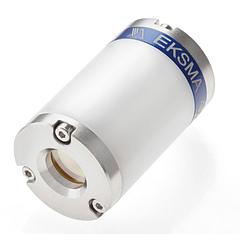
Pockels cell are used to change the polarization state of light passing through it when a voltage is applied to the electrodes of electro-optic crystals such as BBO. When used in conjunction with polarizer, Pockels cells can be used as fast optical switches. Typical applications include Q-switching of the laser cavity, laser cavity dumping and coupling light into and from regenerative amplifiers.
BBO based Pockels cells can be useful at wavelengths from the UV to more than 2 μm. Low piezoelectric ringing makes these Pockels cells attractive for the control of high-power and high pulse repetition rate lasers. Fast switching electronic drivers properly matched to the cell are available for Q-switching, cavity dumping and other applications. Pockels cells of PCB series are transverse field devices. Low electro-optical coefficient of BBO results in high operating voltages. The quarter-wave voltage is proportional to the ratio of electrode spacing and crystal length. As a result, smaller aperture devices have lower quarter-wave, however even for 2.5 mm aperture devices the quarter-wave voltage is as high as 4 kV @ 1064 nm. Double crystal design is employed to reduce required voltages and to allow operation in half-wave mode with fast switching times.